The KonMari method: how do you declutter your home and lighten your mental load, even with children?
Because a well-organised home isn’t just nicer to look at. It also means fewer things to manage every day.
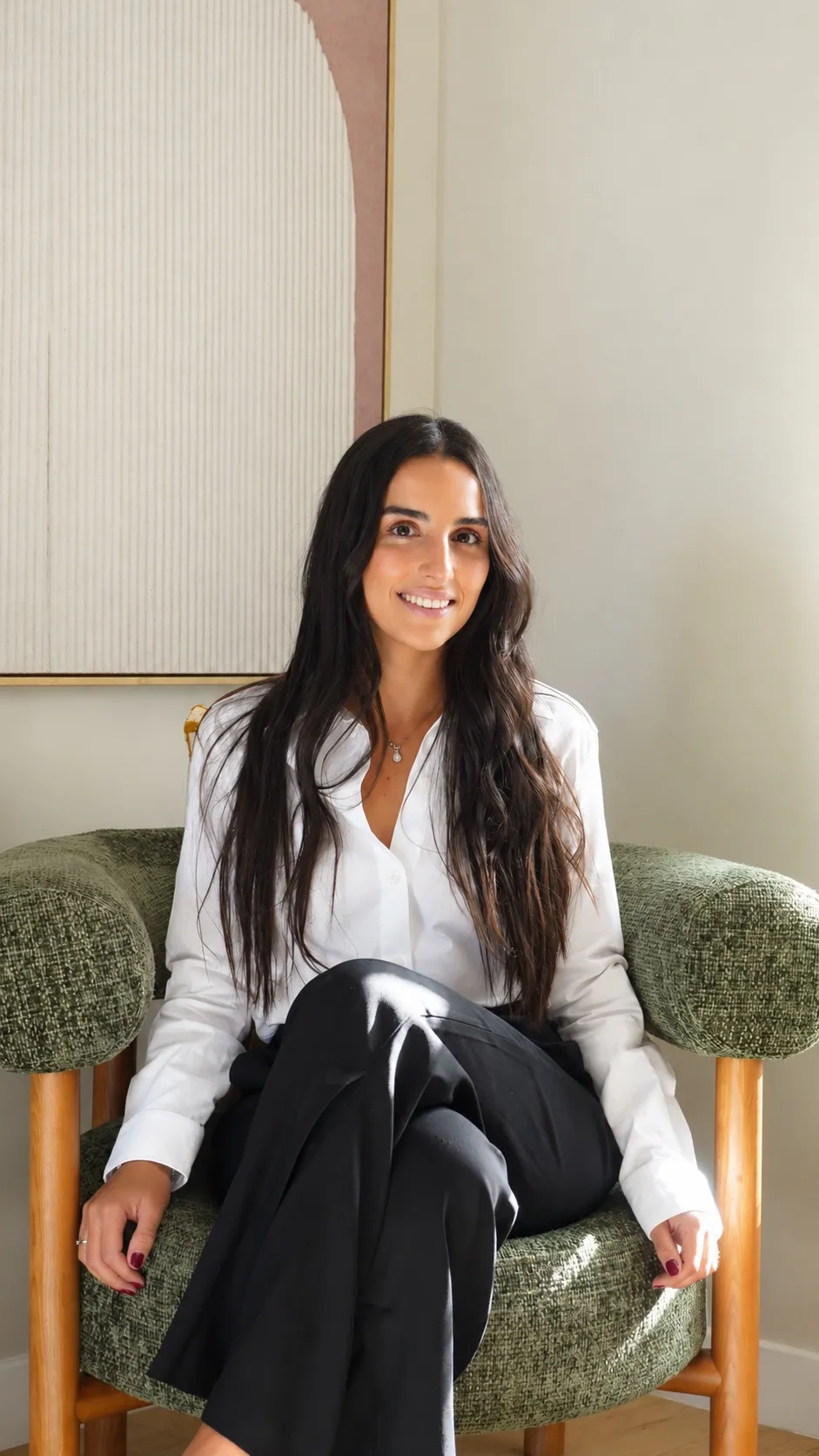
 By Rebeca, founder of Spanish Mum in Paris
There’s something I’ve noticed since becoming a mum of two: things come into a home far more easily than they leave it.
A new toy, a few clothes, a present, things we keep “just in case”… And little by little, the cupboards fill up, the drawers overflow and we start running out of space.
We tell ourselves we’ll have a clear-out next weekend. Then the one after.
And in the meantime, we carry on tidying, moving, looking for and reorganising the same things.
That’s exactly where tidying becomes a question of mental load at home.
Because the problem isn’t only the mess. It’s also everything it forces us to keep in our heads.
In our home, I’ve found an approach that helps me a great deal: the KonMari method, created by Marie Kondo.
And today, I wanted to explain its philosophy, why I find it so interesting and how I adapt it to our family life.
What exactly is the KonMari method?
The KonMari method was created by Marie Kondo, a Japanese consultant who specialises in tidying.
Its philosophy is quite different from what we usually imagine when we talk about having a clear-out.
Usually, we open a cupboard and ask ourselves: “What can I throw away?”
With KonMari, the question is turned around: “What do I really want to keep?”
The idea is to choose the things that have a place in our lives, in particular those that bring us joy.
This is what Marie Kondo calls spark joy.
Personally, I find this way of looking at things very interesting. We’re not simply trying to get rid of as much as possible. We’re thinking about what we really want to have around us.
And when we start looking at our belongings this way, we sometimes realise that we keep a huge number of things out of habit, out of guilt or simply because we’ve never taken the time to sort through them.
To find out more about its origins and principles, Univers du Japon has a very thorough article on it (in French).
Why does this method work so well?
There are three principles I particularly like.
1. Sort by category, not by room
This is probably one of the most important points of the method.
Instead of starting by tidying the bedroom wardrobe, you gather all your clothes together in one place.
The ones from the bedroom, the hallway, the drawers, the other cupboards…
And often, that’s when you realise just how much you actually own.
The KonMari method suggests following this order:
- Clothes
- Books
- Papers
- Miscellaneous items, known as komono
- Sentimental items
The idea is to start with the categories that are generally easier to sort and to finish with those that carry emotional value.
2. Choose what you want to keep
Rather than keeping everything “just in case”, you take the time to look at each item and decide whether it still deserves a place in your home.
Do we use it? Do we love it? Does it still fit our life today?
It’s a way of making more conscious choices.
And of course, that doesn’t mean throwing away every practical item that doesn’t bring us any particular joy. Some are simply essential to our everyday lives.
3. Everything must have its place
This is the principle that, in my view, really changes everyday life.
When something doesn’t have a set place, you end up putting it down somewhere until you get round to putting it away.
Then another thing comes along. And another.
On the other hand, when everything has a specific spot, tidying becomes much simpler.
You know where to find your things, but above all where to put them back.
And with children, that’s precious!
How do you apply the KonMari method in a home with children?
The theory is interesting, but in a family home, you also have to be realistic.
There are the toys, the clothes that get too small, the drawings from school, the books, the birthday presents…
And unless you live in an 800 m² villa, at some point you have to make choices!
Here’s how I like to apply these principles in our home.
Clothes: start with what you no longer wear
Clothes are an excellent starting point.
You gather a category together, look at what you actually use and set aside what no longer suits you.
With children, I find it particularly useful to check sizes regularly.
We sometimes keep clothes that have become too small simply because we haven’t had time to take them out of the wardrobe.
The idea is to prepare a bag for the clothes to give away, pass on or keep for another child.
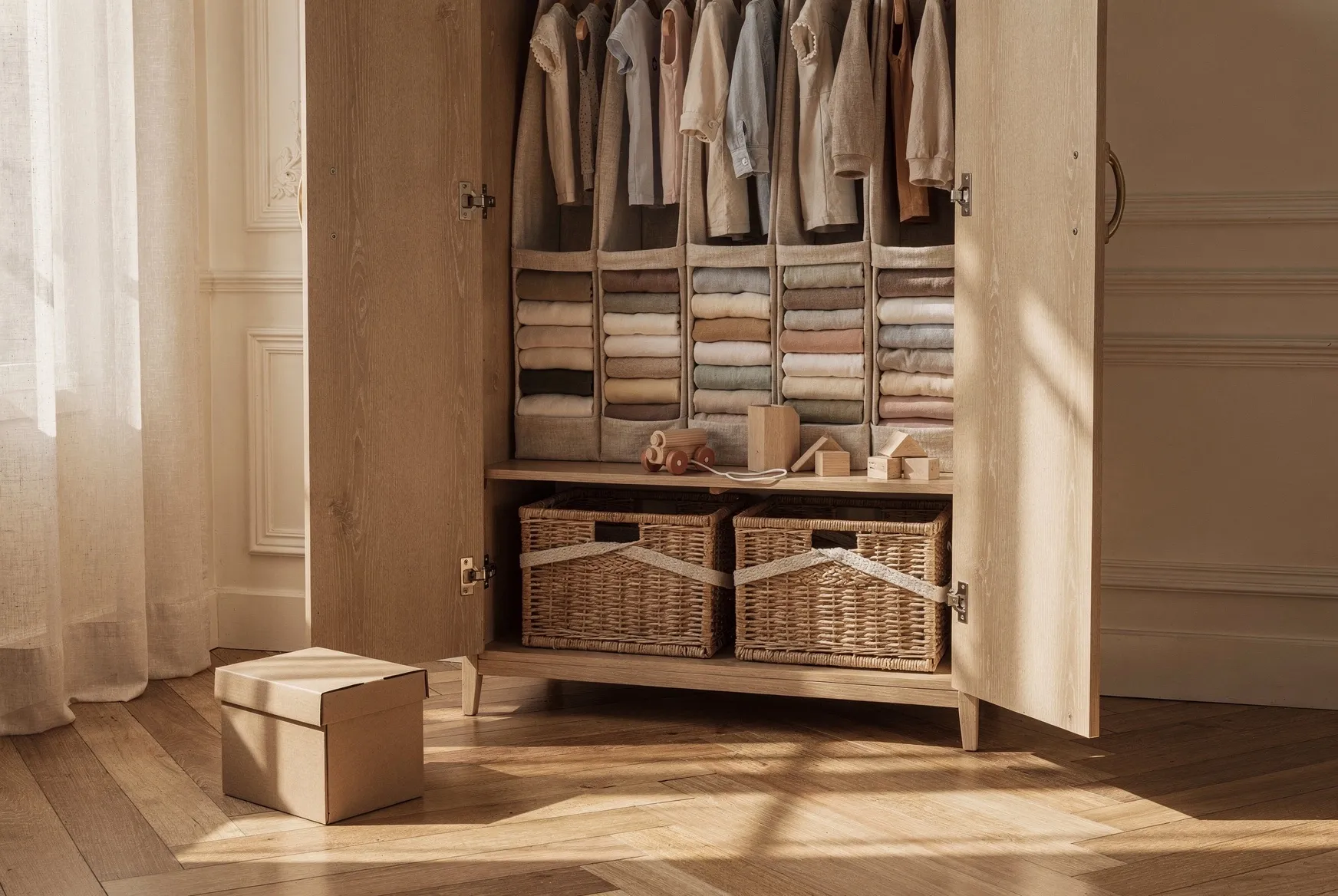
Once the sorting is done, you organise the clothes so that you can see them and find them easily.
Toys: learning not to let everything pile up
This is probably one of the most important topics in a home with young children.
Toys pile up very quickly.
Between birthdays, Christmas, presents from family and friends and the little everyday purchases, we sometimes end up with far more toys than the children actually play with.
At home, I try to apply one simple rule:
When a new toy comes into the house, we look together at whether an old one can be given away or passed on.
It isn’t an official rule of the KonMari method, but a personal habit inspired by its philosophy.
I think it’s important to involve children from a very young age, while of course adapting the approach to how old they are.
You can ask them which toys they really love, which ones they no longer play with and which ones might make another child happy.
The aim isn’t to force them to part with their things, but to teach them, little by little, to choose and to take care of what they own.
And above all, to show them that we don’t need to keep everything.
The kitchen: stop moving the same things around
In the kitchen too, things pile up easily.
Containers without lids, duplicate utensils, appliances we never use, mugs that take up a whole shelf…
I recommend grouping things by category and looking at what is really used.
Then you give everything a logical place.
The things you use every day should be easy to reach. Those you use less often can be stored elsewhere.
A well-organised kitchen isn’t necessarily a perfectly minimalist one.
Above all, it’s a kitchen where you can prepare meals without constantly having to hunt for things.
The hallway and living room: simplifying everyday routines
Shoes, bags, coats, school things…
These are often the things we drop quickly when we get home and then find all over the place.
The solution isn’t necessarily to buy more storage.
Before that, you need to look at what really needs to stay in these spaces and plan a place for the things you use every day.
With children, simple, accessible storage can also help them to join in.
My personal adaptation: a small clear-out every two months
The original KonMari method encourages one big, thorough clear-out, category by category, rather than endlessly tidying the same spaces.
For my part, I’ve adapted this philosophy to our family life.
Roughly every two months, I try to take a moment to look at what has built up.
Not necessarily to redo the whole house.
But to check the clothes, the toys, the cupboards and the things that are starting to take up too much room.
Because a home is constantly changing.
We buy things, we’re given things, the children grow, our needs change.
And I’d rather take a little time regularly to make choices than wait until everything overflows.
What does this have to do with the mental load at home?
For me, this is where the subject gets really interesting.
When we talk about the mental load at home, we often think of meals, food shopping, appointments or organising the children.
But tidying is part of it too.
Because a cluttered home can force us to make a multitude of little decisions:
- Where am I going to put this?
- Why can’t I find that thing any more?
- Do we already have something similar?
- When am I finally going to find the time to have a clear-out?
They’re small things, but they keep coming back.
And the simpler our home is to use, the less we need to think about how it runs.
Now, I don’t think a perfectly tidy home is the answer to all our problems.
And I certainly don’t believe we should add yet another pressure to our daily lives by trying to organise everything perfectly.
Quite the opposite.
The whole point of tidying is to ask less of us, not more.
A beautiful home is good. A home where you feel good is even better.
When I created Spanish Mum in Paris, interior styling had a very important place in my project.
And it still does.
I love beautiful spaces, materials, colours, the details that make an interior feel warm.
But over time, and especially on becoming a mum of two, I understood something.
A home can be stunning and yet very complicated to live in.
If you can never find your things, if the cupboards overflow or if the organisation always rests on one person, something isn’t working.
That’s why my approach now goes beyond interior styling.
With Spanish Mum in Paris, I support private clients with the layout, Home Styling and organisation of their home, to create spaces that truly fit their everyday lives.
And with Home & Life Balance, I also work with companies through talks and workshops on the mental load at home.
Because I’m convinced that what happens at home doesn’t stop at the office door.
And that sometimes, small changes to the way we organise things can already do us a great deal of good.
My philosophy remains the same: a home shouldn’t just be beautiful. It should also make our lives simpler.
Creating a home you love. 🤎
Ready to start at home?
I’ve put together a practical guide inspired by the KonMari method, designed especially for families. For the moment, it’s only available in French, but I wanted to share it with you here all the same.
If you read French, you’ll find in it the main principles of the method, tips for applying them in the different rooms of the house and a checklist to help you get started at your own pace.
Practical guide · Free PDF, in FrenchUne maison plus légère.My family-friendly decluttering guide inspired by the KonMari method (in French). Seven pages, with a checklist to stick on the fridge.Download the guide (PDF, in French)
RebecaFounder of Spanish Mum in ParisCreating a home you love.