The mental load at home doesn’t stop at the office door. What if companies finally talked about it?
Why recognising employees’ mental load can make a real difference, both in their personal lives and at work.
 By Rebeca, founder of Spanish Mum in Paris

8.30am. The working day begins. But in your head, it began long before.
6.45am. The alarm goes off.
Make breakfast. Get the children dressed. Find that shoe that always disappears at the worst possible moment. Check the bags, the water bottles, the PE kits.
8.15am. Drop the children off at school.
9am. First meeting of the day. The laptop is open, the coffee is ready. You’re at work.
But in your head, 37 tabs are still open.
Have I booked the dentist?
Need to buy more nappies.
What are we having for dinner tonight?
I must reply to that message from school.
Oh, and it’s Louise’s birthday on Saturday. Have we bought her present?
And I need to think about winter clothes too. The little one’s shoes are too small now.
12.30pm. Lunch break.
A break at last? Not really. You use it to order the food shopping, book a doctor’s appointment and reply to three messages about the weekend plans.
6pm. End of the working day.
Then it’s off to school pick-up, activities, homework, dinner, bath time and bedtime.
9pm. The house is finally quiet.
But your brain just keeps going.
And tomorrow, it all starts again.
Welcome to the daily life of many working parents.
Of course, every family is different. But this feeling of constantly having to think of everything, even when you’re not actually doing anything, is something a lot of people know only too well.
And it has a name: the mental load at home.
The mental load isn’t just about doing things. It’s about having to think of everything.
When we talk about sharing the tasks at home, we often think of cleaning, food shopping, meals or laundry.
But behind every visible task, there’s a whole lot of invisible work.
Let’s take a simple example: making dinner.
It isn’t just cooking.
It’s thinking about what you’re going to eat, checking what’s left in the fridge, planning the shopping ahead, taking everyone’s tastes into account and making sure everything will be ready on time.
And it’s the same for dozens of little things, every single day.
The mental load means anticipating, planning, organising, remembering and checking.
It’s being the person who knows when an appointment needs booking, what’s missing from the cupboards, which activity is happening on Wednesday and what needs getting ready for tomorrow.
And even when someone else does a task, the responsibility for thinking about it can still rest on one person’s shoulders.
That’s the whole difference between sharing tasks and sharing responsibility.
When home takes up too much room in our heads
The mental load isn’t necessarily a bad thing. Organising our lives is part of everyday life.
But when it becomes too heavy, constant and unevenly shared, it can end up taking its toll on our wellbeing.
We can feel as though we never really stop. As though we’re always thinking about the next thing to do.
Even moments of rest become hard to enjoy.
At home, this can show up as tiredness, irritability, tension between partners or simply the feeling of never doing enough.
And at work?
You can be fully committed to your job, love what you do and still arrive in the morning with part of your mental energy already taken up elsewhere.
Because it’s hard to leave all your personal worries behind as you walk through the office door.
It can make it harder to concentrate, make some days more tiring or add pressure when something unexpected comes up at home.
It’s not a question of motivation or skills. It’s a question of how much room is left in our heads.
And that’s exactly why the subject deserves to be talked about at work.
Why companies have a role to play too
For a long time, anything to do with running the home was seen as a strictly personal matter.
But our lives aren’t split into two perfectly separate compartments.
We aren’t one person at work and another at home.
An employee can be a manager, a parent, a partner, a carer or simply the person who coordinates much of their household’s daily life.
And all these responsibilities exist side by side.
So why would it matter for a company to recognise this reality?
Because acknowledging a difficulty is already a way of making it possible to talk about it
When a company opens up the conversation about the mental load at home, it sends a simple message to its teams:
“We know your life doesn’t stop at your desk.”
That doesn’t mean the company has to solve everyone’s personal problems.
But it can create a space where employees feel able to talk about certain difficulties without fear of being judged.
Because work-life balance doesn’t depend only on working hours
There’s a lot of talk about working from home, flexibility and the right to switch off.
These are important subjects.
But finishing your day at 6pm doesn’t necessarily mean you get to rest.
For some parents, it’s actually the start of a second day, with a whole other list of responsibilities.
Talking about the mental load lets us take the conversation about work-life balance a little further.
Because raising awareness can also mean giving people practical tools
Recognising the problem is a first step.
But understanding how to organise everyday life better, simplify certain decisions or share out responsibilities can help too.
A company doesn’t need to take over the running of its employees’ homes in order to offer them a moment that’s genuinely useful.
It can simply give them access to ideas and tools they can then adapt to their own lives.
And sometimes, a small realisation can be the start of real change.
Why I created Home & Life Balance
I’m Spanish, a mum of two, and I worked in tech for several years before setting up Spanish Mum in Paris.
I’ve always loved interior design and beautiful homes.
But when I became a mum, I started to look at my home differently.
Between work, the children, meals, appointments and all those little things you have to remember, I realised just how much our surroundings and the way we organise things could shape our everyday lives.
I wanted a beautiful home, of course.
But above all, I wanted a home that made life simpler for us.
It was this belief that led me to create Spanish Mum in Paris, and then to develop Home & Life Balance.
Because over time, I realised that this subject went far beyond interior design or tidying.
It was about the way we live, share responsibilities and find a little more calm in days that are already very full.
And I asked myself a question:
If the mental load at home follows us to work, why don’t we talk about it more in the workplace?
Home & Life Balance: a talk to understand, discuss and come away with solutions
With Home & Life Balance, my aim is simple: to open up this conversation in companies, without making anyone feel guilty and without lecturing.
I offer a one-hour interactive talk, designed for employees, whether they’re parents or not.
A 45-minute talk, followed by 15 minutes of discussion.
Together, we work through four stages.
1. Understand
What is the mental load at home?
Why do we sometimes feel as if we have to think of everything?
And why isn’t sharing the tasks always enough to lighten this invisible responsibility?
2. Identify
Each participant takes a moment to reflect on their own daily life.
What takes up the most mental energy for them?
Meals? Food shopping? Cleaning? Appointments? Tidying? Organising everything around the children?
An individual exercise helps them identify the areas that weigh on them most, with no obligation to share their personal experience.
3. Reorganise
We then explore some very practical solutions.
For example, putting together a list of easy meals to use again and again, rather than wondering every evening what to cook.
Setting up a shared family calendar.
Rethinking how responsibilities are shared out so that one person doesn’t have to plan ahead for everything.
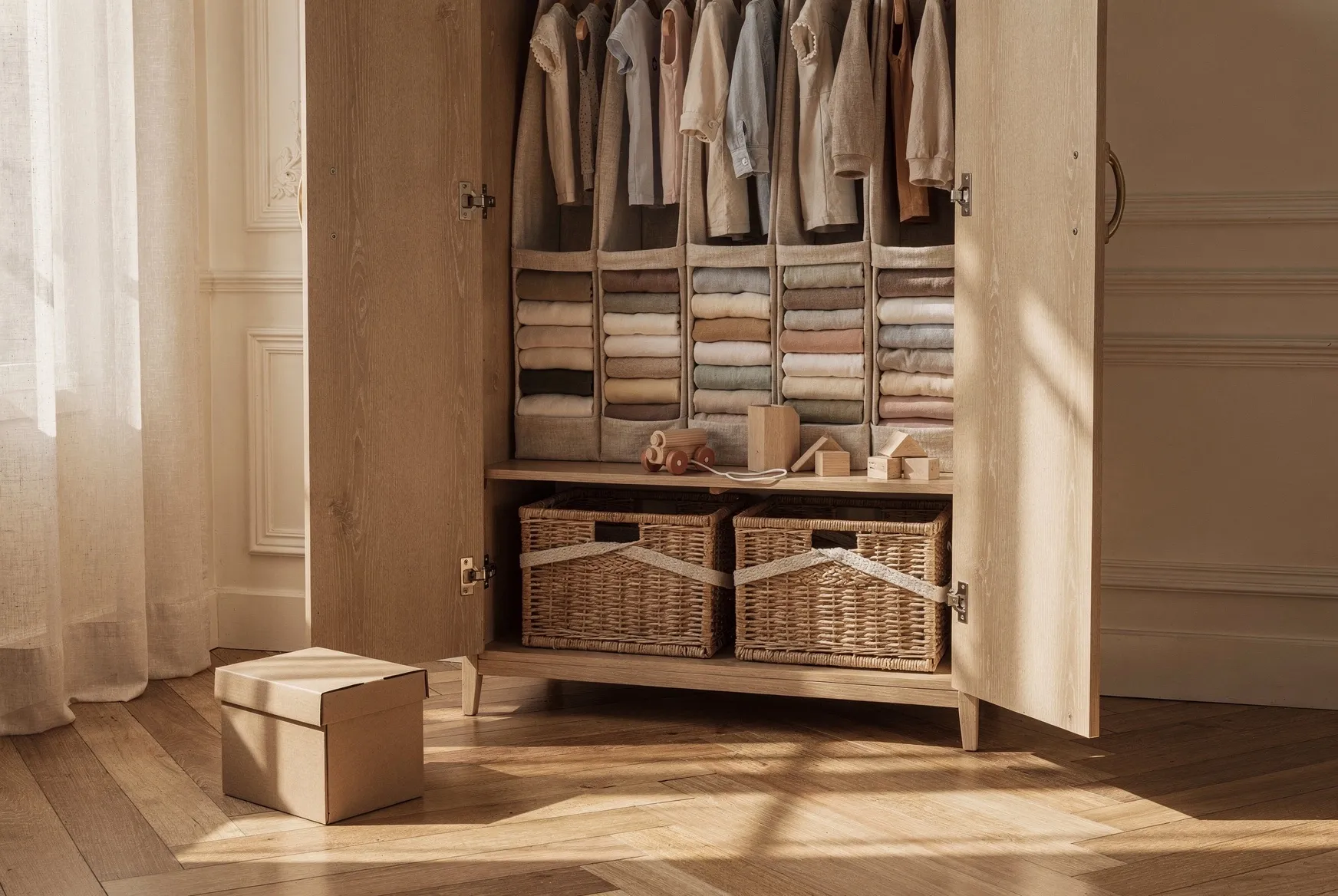
Or simplifying storage at home so that everything has its place.
The idea isn’t to create a perfect system.
It’s to make everyday life simpler, with realistic solutions for every household.
4. Lighten
At the end of the talk, each participant chooses one first step to put into practice.
- One task to simplify.
- One responsibility to share more evenly.
- One habit to change.
Something small, but concrete.
Because I truly believe that lightening the mental load isn’t about learning to do it all. It’s about learning how to stop having to think of it all.
A talk doesn’t change everything. But it can open up an essential conversation.
A talk isn’t going to solve all of a family’s organisational difficulties in one hour.
And that isn’t what it’s for.
What it can do, though, is help put into words a reality that often goes unseen.
It can help some employees recognise themselves in situations they thought they were the only ones going through.
It can give them practical ideas for changing a few habits at home.
And above all, it can be a reminder that work-life balance isn’t built only at the office.
It’s also built in the way we organise our lives once we get home.
For companies, opening up this conversation is a way of showing that they care about the people behind the job titles, while offering a practical awareness-raising initiative.
For employees, it’s a chance to step back from their daily lives and come away with a few simple tools.
Because what happens at home doesn’t stop at the office door.
What if we finally started talking about it?
What if we opened up this conversation in your company?
With Home & Life Balance by Spanish Mum in Paris, I offer talks and workshops to raise teams’ awareness of the mental load at home and give them practical tools to make everyday life lighter.
Sessions can take place in person or online.
I’m currently offering a first talk free of charge to a handful of companies, to introduce this initiative and gather feedback from participants.
RebecaFounder of Spanish Mum in ParisCreating a home you love.