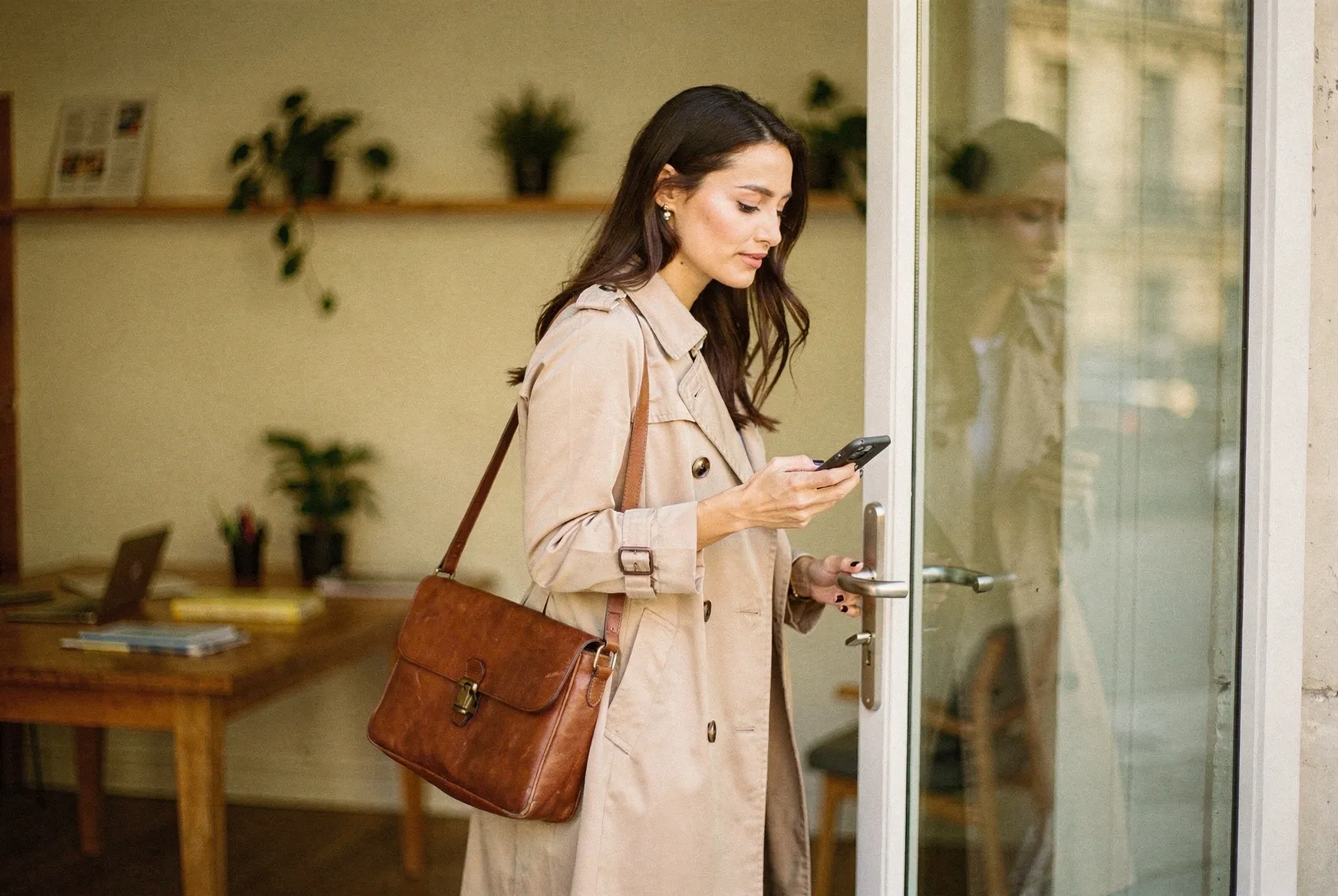
The mental load doesn’t stop at the office door
Why it’s time to talk about what happens at home too, even at work.
 By Rebeca, founder of Spanish Mum in Paris

There’s something I find quite paradoxical.
These days, there’s a lot of talk about wellbeing at work. About managing stress, switching off, the balance between work and personal life.
And that’s a very good thing.
But there’s one subject that, to my mind, is still too often left out of these conversations: everything we have to manage at home.
The food shopping, the meals, the laundry, the doctor’s appointments, the children’s activities, the birthday parties to organise, the paperwork, the things we absolutely mustn’t forget…
And above all, that little voice in our heads constantly reminding us of what’s still left to do.
Even when we’re at the office.
Even when we’re in a meeting.
Even when we’re simply trying to concentrate.
This is what’s known as the mental load at home.
And I’m convinced it’s time to give it more room in our conversations about wellbeing at work.
Why is it still so hard to talk about at work?
I sometimes feel that mentioning your household responsibilities in a professional setting can come across badly.
As if talking about the tiredness that comes from home life amounted to saying you’re not organised, available or committed enough in your job.
As if we had to leave all our personal worries at the office door.
So, more often than not, we don’t talk about it.
We keep on working, replying to messages, taking part in meetings, meeting our deadlines.
And at the same time, another list keeps running through our heads.
What are we having for dinner tonight?
Is there any milk left?
Who’s picking up the children?
Must remember to book that appointment.
And that present for Saturday, has anyone sorted it out?
On their own, they’re not necessarily big things.
But when they all add up, it can become exhausting.
And not talking about it doesn’t mean the load isn’t there.
I think it’s important to be able to acknowledge this reality without making the people affected feel guilty, and without treating it as a lack of professionalism.
Because we aren’t two different people: one at work and the other at home.
We are one and the same person, and our energy has its limits.
A realisation that came from my own experience
Before setting up Spanish Mum in Paris, I spent five years working in tech in Paris.
I loved building my career, learning, moving forward.
And then I became a mum of two.
It was during that time that I started to realise everything that running a home and a family really involved.
Of course, there were the visible tasks.
But what weighed on me most wasn’t always doing things.
It was having to think about them.
Anticipating what was needed, organising the weeks, planning for the unexpected, checking that nothing had been forgotten.
And sometimes feeling as if that mental list never ended.
So I started asking myself a question:
How can you really rest at home when your mind keeps working all the time?
That question profoundly changed the way I see the home.
A beautiful home isn’t always enough
I’ve always loved interior design.
That passion began in London, when I had my first real home of my own and discovered the joy of creating a space that reflected who I was.
It was this passion that gave rise to Spanish Mum in Paris.
But over time, I came to understand something essential.
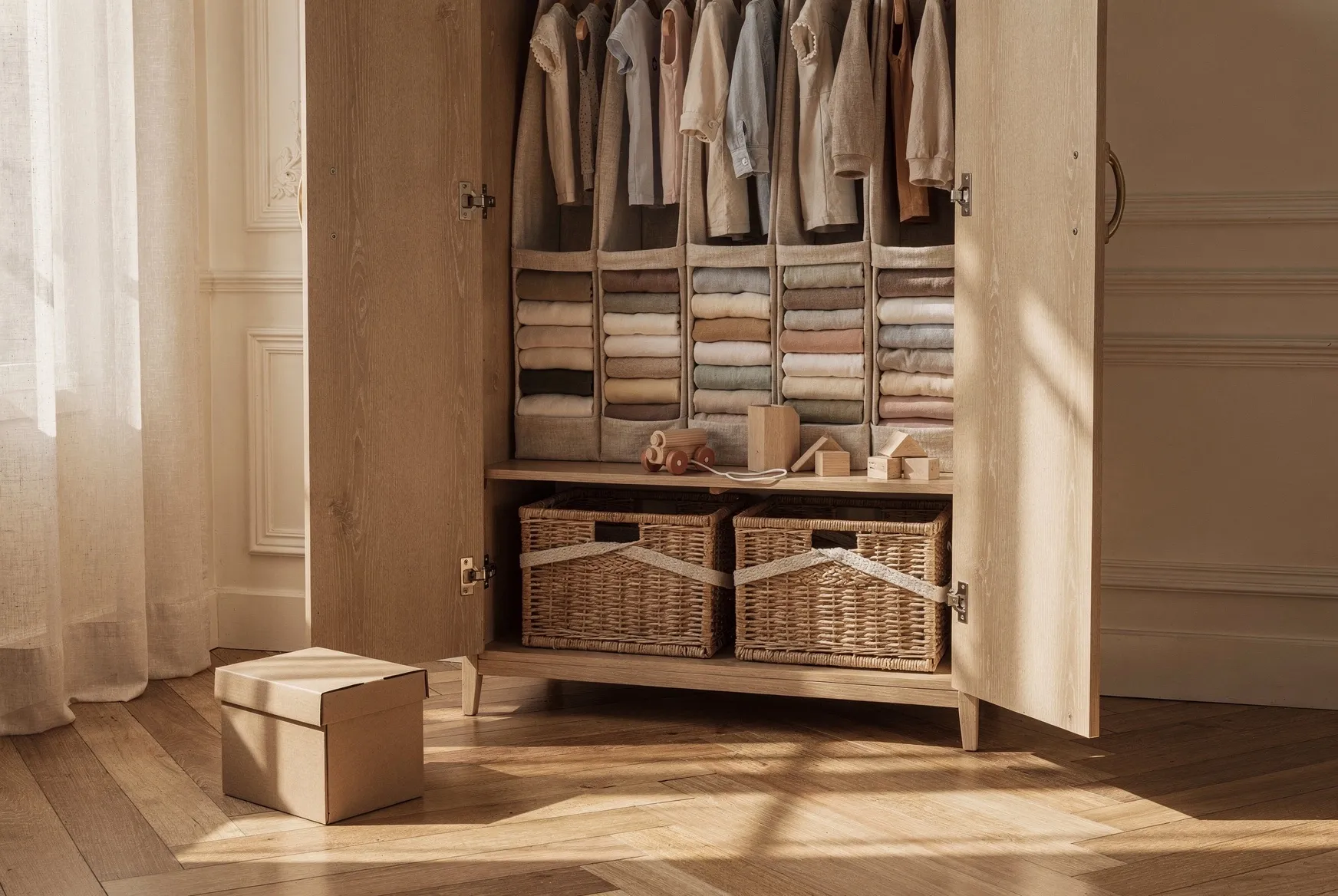
A home shouldn’t just be beautiful. It should also make our lives simpler.
A warm interior is a wonderful thing.
But if everything is hard to find, if every day takes a huge amount of organising and if just one person has to think of everything, that home can also become a source of fatigue.
That’s why my approach has evolved.
Today, through Spanish Mum in Paris, I care as much about how beautiful our spaces are as about the way we live in them.
How do you organise a home so that it works better?
How do you put simple habits in place?
How do you get every member of the household more involved?
How do you make sure responsibilities are genuinely shared?
Because ultimately, feeling good at home doesn’t depend only on what you can see, but also on everything you no longer need to carry around in your head.
What if companies were part of the conversation too?
We spend a large part of our lives at work.
So it seems natural to me that companies should take an interest in anything that can affect the balance in their employees’ lives, including outside the office.
That doesn’t mean a company should interfere in anyone’s private life.
Or that it has to solve every problem of daily life.
But it can open up a space for discussion, raise awareness and provide access to useful resources.
Talking in the workplace about the mental load at home also means addressing wider issues:
- Sharing responsibilities between partners or within the household.
- Equality between women and men.
- Parenthood and the different stages of life.
- The balance between personal and working life.
- The right not to have to manage it all, plan for it all, carry it all.
And above all, it lets employees see themselves in a reality that sometimes remains invisible.
Because the mental load doesn’t only affect mums.
It can affect parents, couples without children, people who live alone or those caring for a loved one.
At different times in our lives, we all have responsibilities that stay on our minds long after the working day is over.
Home & Life Balance: a different way of supporting companies
It was out of these reflections that Home & Life Balance was born, a new side of Spanish Mum in Paris dedicated to companies.
With this initiative, I wanted to build a bridge between two worlds we too often tend to keep apart: home and work.
Through talks and practical workshops, I support companies that want to raise their employees’ awareness of the mental load at home and give them the tools to make everyday life lighter.
My approach is built on three simple ideas.
First, making the invisible visible.
Understanding what the mental load really is, why it can become a burden and how it shows up in our everyday lives.
Next, opening up a dialogue without judgement.
Talking about how the home is organised, how responsibilities are shared out and what everyone expects, without making anyone feel guilty or trying to find someone to blame.
Finally, taking action.
Because becoming aware of a problem matters, but knowing what to actually change matters just as much.
I share practical ideas for simplifying how the home is run, creating routines suited to each household and sharing out responsibilities more evenly.
Not to turn employees into organising experts.
But to help them get back time, headspace and a calmer everyday life.
Does wellbeing at work sometimes start at home?
I truly believe it does.
Not exclusively, of course.
Working conditions, workload, management and company culture all have a vital role to play.
But our personal lives matter too.
And when everyday life at home becomes simpler, when responsibilities are shared more evenly and we have fewer things to plan ahead for on our own, we can find more peace of mind.
That’s the vision I want to share with companies.
A vision of wellbeing that doesn’t end with office hours.
A vision in which home isn’t just the place we go back to after work, but somewhere we can truly recharge.
And a vision in which talking about the mental load at home is no longer seen as a weakness, but as a useful and legitimate conversation.
What if we started talking about it?
I know we can’t make all the responsibilities of daily life disappear.
There will always be shopping to do, meals to make, appointments to arrange and unexpected things to deal with.
But I believe we can change the way we approach them.
By simplifying what can be simplified.
By sharing more.
By no longer assuming that one person should naturally think of everything.
And by giving this subject the place it deserves, including in the world of work.
That’s what Home & Life Balance is all about.
Today, I invite companies that would like to open up this conversation with their teams to find out more about my talks and workshops.
Because what happens at home doesn’t stop at the office door.
And because, for me, lightening the mental load isn’t about learning to do it all. It’s about learning how to stop having to think of it all.
RebecaFounder of Spanish Mum in ParisCreating a home you love.