The 5 habits I’ve taught my children from a very young age (and that have changed our everyday life)
How we taught our two children to play their part at home, look after their things and settle into routines that make our everyday life simpler and calmer.
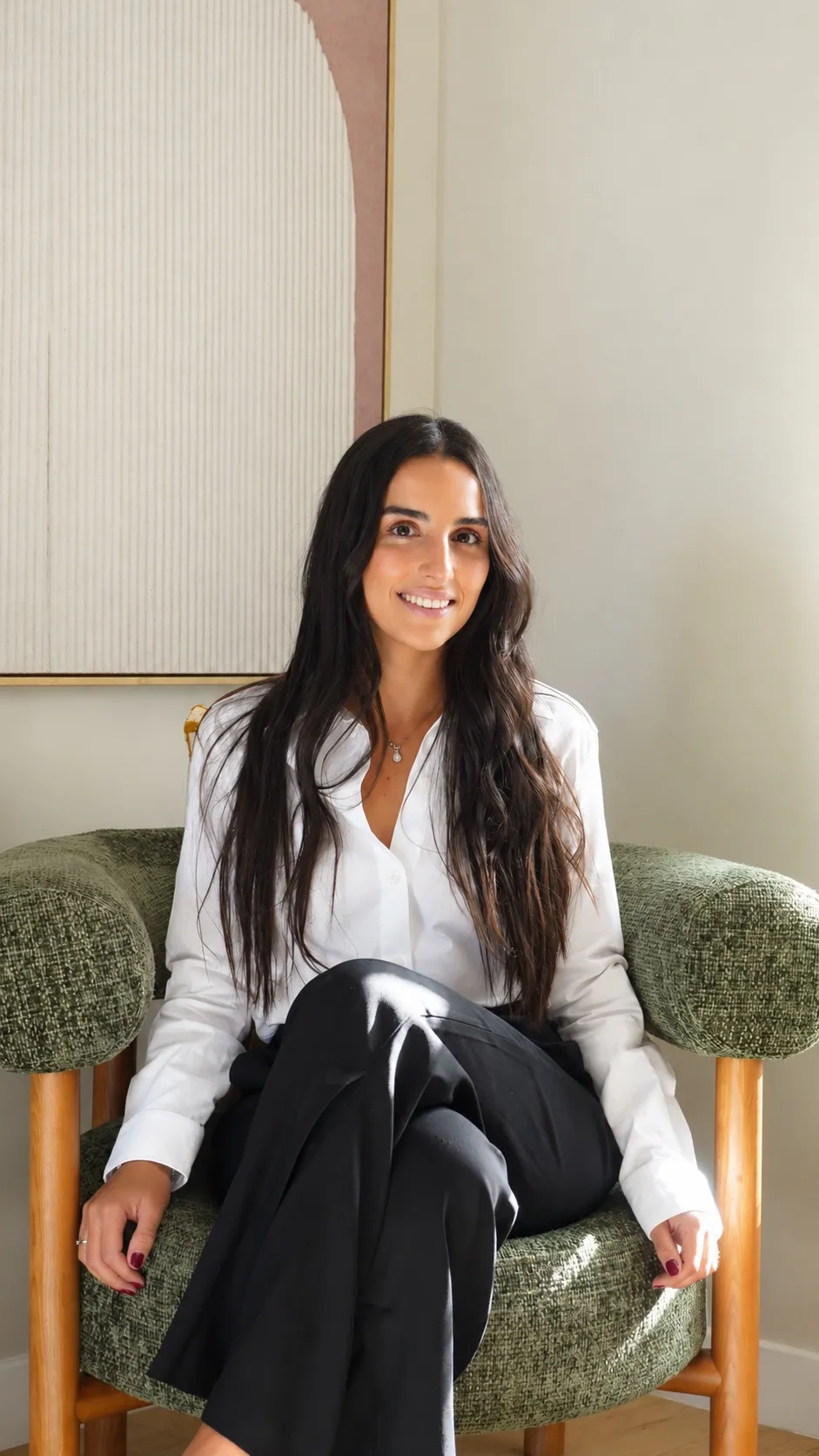
 By Rebeca, founder of Spanish Mum in Paris
We have two children at home. They play, they run, they draw, they build things, they eat and, of course, they sometimes make a mess everywhere.
And yet our home is almost always tidy.
Not because I spend my days tidying up after them. Not because they never get their toys out. And certainly not because we live in a perfect home.
It’s because, ever since they were tiny, we’ve put a few simple habits in place that are now part of our everyday life.
I’ve always been a very organised person. When things are where they belong and my surroundings feel calm, I feel better. My mind is freer, and I enjoy my home and my family more.
When I became a mum, I realised I wanted to pass this way of living on to my children.
Not so that they’d become obsessed with tidying, but so they’d naturally learn to take care of their surroundings and play their part in family life.
Here are the five habits we’ve introduced at home since they were very young, and which, over time, have really changed our everyday life.
1. Learning to eat sitting down, from the very first meals
This is a habit we put in place very early on.
As soon as my children started eating their meals sitting up, in a set-up suited to their stage of development, I wanted to teach them that we eat at the table.
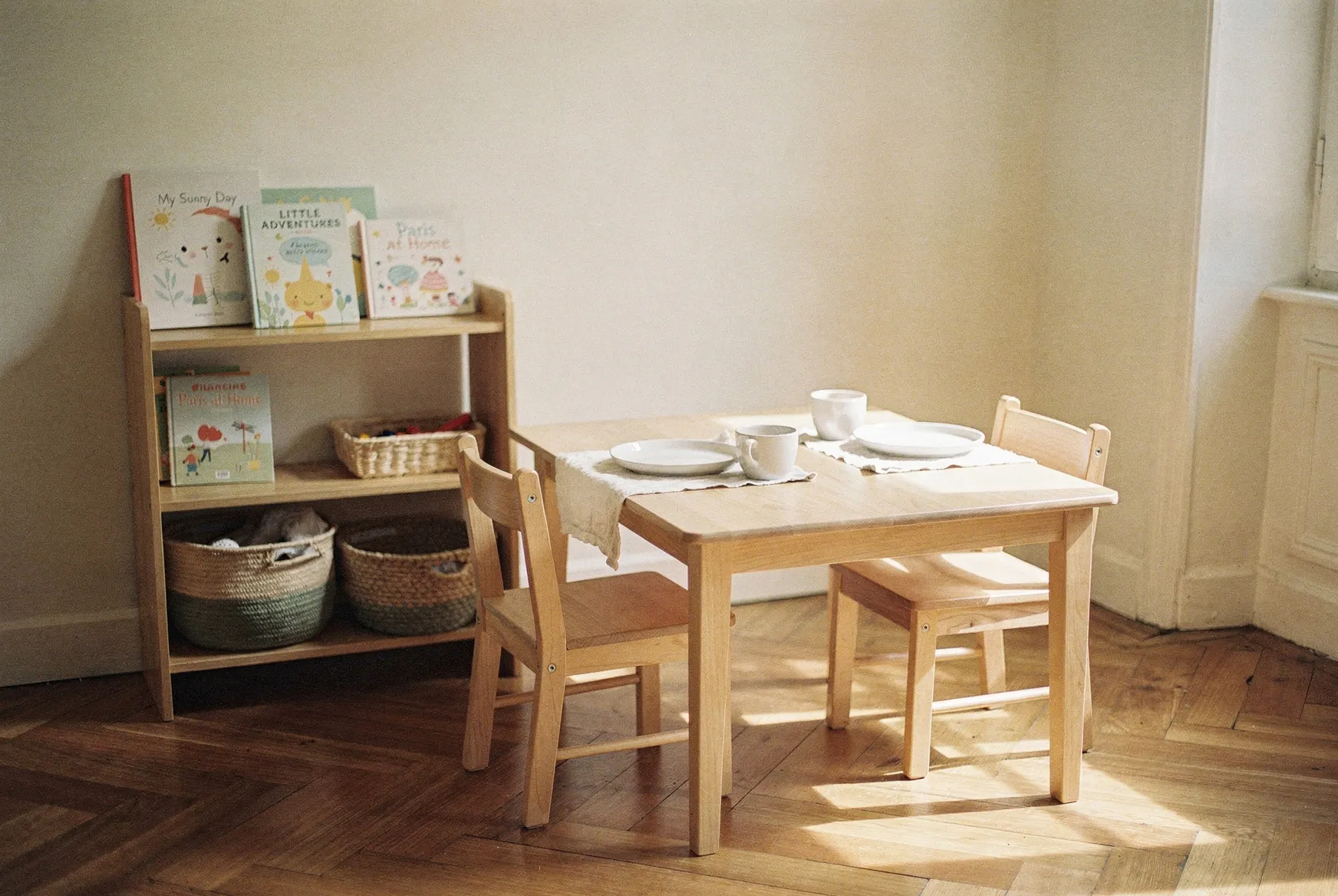
As they grew, we set up a little table and chairs their size.
The idea was to give them a space of their own, where they could eat comfortably and gradually become more independent.
In our house, we try not to wander all over the house with a biscuit or a snack in hand.
It might seem like a small detail, but I find this habit makes a huge difference.
The crumbs mostly stay in the eating area, the children understand that there’s a time to eat and a time to play, and we don’t end up finding bits of food in every room.
Of course, with young children, there are always spilt drinks, messy plates and meals that don’t go quite to plan!
But that’s all part of learning.
Another habit we’ve passed on to them: taking their plate back to the kitchen when they’ve finished, as soon as they were able to do it safely.
At first, we helped them do it. Now it comes much more naturally.
And I like the idea that they understand a meal doesn’t just end when you leave the table. There are also a few little things to do to leave the space nice for everyone.
2. Helping around the house, even when they’re still tiny
I think this is one of the most important habits I’ve passed on to my children.
I’ve always encouraged them to get involved in life at home.
Even when they were still too little to really help.
For example, we lay the table together. They can bring the napkins, set out cutlery suited to their age or help clear up after a meal.
They also like helping me empty the dishwasher, handling the safe items while I keep an eye on them.
And let’s be honest: at first, their help didn’t save me any time at all!
A job I could have finished in two minutes could easily take ten.
But that wasn’t the point.
What mattered to me was giving them the feeling that they were contributing to something.
Showing them that our home isn’t a place that runs by itself, thanks to one person who takes care of everything.
It’s a shared space, where everyone can do their little bit.
I find children are often very proud when they’re given a responsibility suited to their age.
And the more naturally you involve them in everyday life, the less housework feels strange or out of the ordinary as they grow up.
For me, there’s another very important side to this: organising the home should never weigh on just one person’s mind.
Teaching children to join in isn’t about giving them adult responsibilities. It’s simply about passing on the idea that looking after your home is a family affair.
3. Putting one toy away before getting another out
With two children, toys can take over the house very quickly.
It starts with a few cars, then come the building blocks, the little figures, the books, the puzzles…
And suddenly the living room looks like a giant playroom!
So we came up with a very simple rule:
When you’ve finished playing with something, you put it away before moving on to something new.
Of course, I don’t ask them to put away every little piece when they’re building a whole world out of several different toys.
But when the activity is over, we try to put things back where they belong before getting anything else out.
At first, it took a lot of guiding, showing and repeating.
Now they understand how it works much better.
And I find this habit teaches them several things.
First, to look after their toys.
Next, that you don’t need to get everything out at once to have fun.
And finally, to follow a certain order: you finish one activity, tidy up, then move on to the next.
For us, it also makes a huge difference at the end of the day.
Instead of having to clear up a mountain of toys before bedtime, there’s usually far less left to put away.
And above all, tidying up becomes part of playing, instead of a chore that comes hours later.
4. Explaining that everything has its own home, just like in Toy Story
This one is probably my favourite.
I’ve always thought children understand certain habits much better when you tell them a story.
So, rather than just repeating “Put your things away”, I like to explain to them that everything has its own home.
- The books live on the bookshelf.
- The cars have their garage.
- The cuddly toys have their basket or their little bed.
And when the day is over, all these things want to go home and rest.
A bit like in Toy Story, where the toys have lives of their own!
I find it a really fun image, and it makes tidying up feel much more natural for children.
Instead of being an order from the grown-ups, tidying up becomes almost like a little story you finish together.
But for it to work, one thing is essential: things really do need to have a specific place.
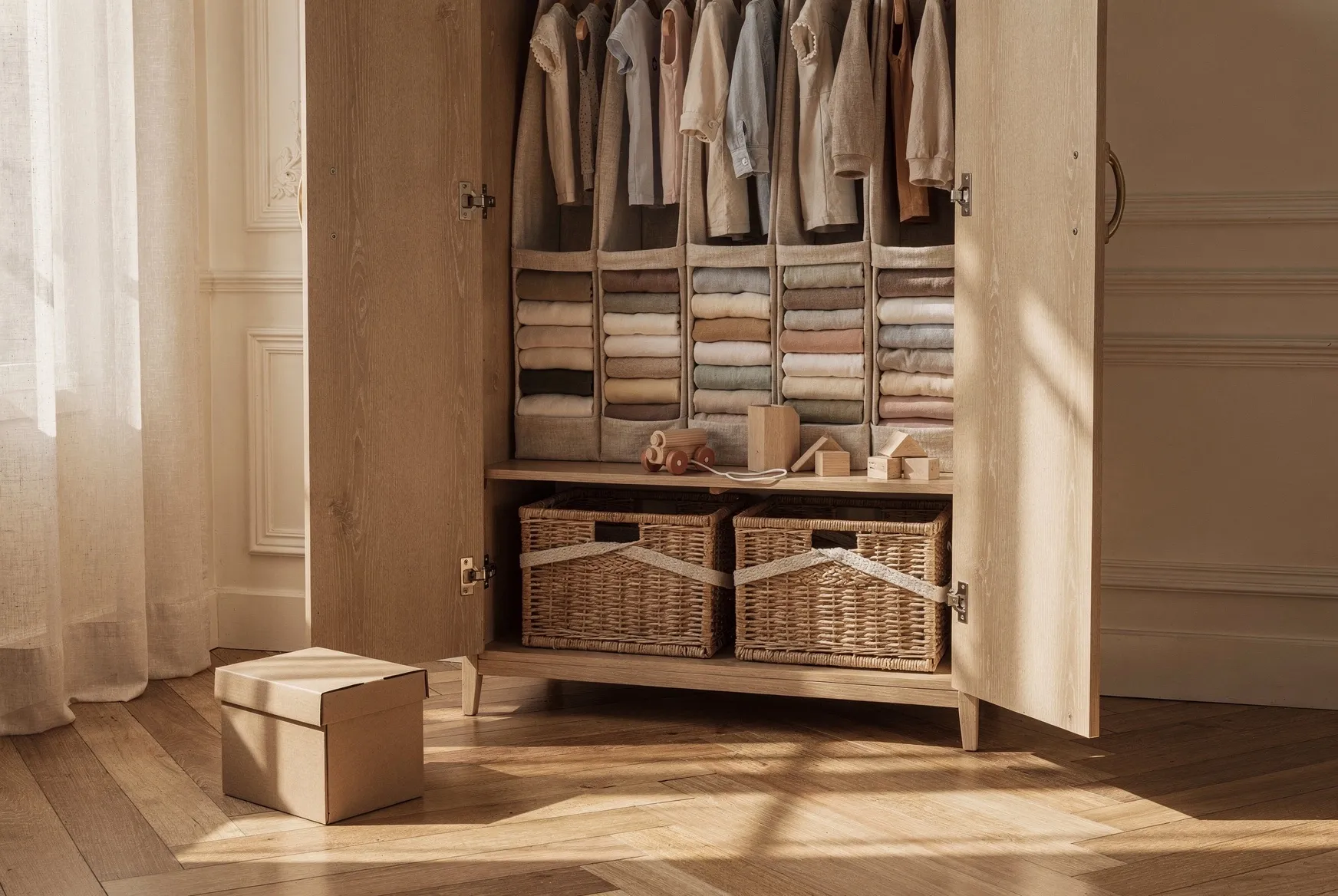
That’s why I put a lot of thought into child-friendly storage.
Baskets they can reach, shelves at their height, simple categories and enough space to find everything easily.
Because if a child doesn’t know where their toy goes, or has to ask for help to open a tricky cupboard, it’ll be much harder for them to make it second nature.
It’s also one of the reasons I love combining interior design and home organisation so much.
A space can be beautiful, but it also needs to be designed for the people who live in it.
And when children can put their things away themselves, they gradually become more independent.
5. Setting up a regular sleep routine from a very young age
If there’s one habit that has truly changed our family life, it’s sleep.
Ever since my children were babies, I’ve always attached a lot of importance to their sleep routine.
For their wellbeing, of course, but also because I think parents need to get some time back for themselves.
With work, children, meals and all the everyday responsibilities, evenings can easily turn into an extension of the day.
And I didn’t want our time as a couple to disappear completely behind all that organising.
My experience with the Brigitte Langevin method
When my children were around six months old, I became interested in the Brigitte Langevin method, an approach designed to help babies learn to fall asleep on their own.
We used it as inspiration to set up bedtime habits that suited our family.
This experience played an important part in how we organise ourselves and in the way we’ve shaped our evenings.
In fact, I’ll be writing a whole article on the Brigitte Langevin method, to tell you in more detail how we approached it, what we put in place and what I take away from it looking back.
Babies’ sleep is obviously a very personal subject. Every child has their own needs, development and pace. I’m sharing my experience as a mum here, not a method that will necessarily suit every family.
Our evening routine today
In our house, evenings usually follow a fairly simple rhythm.
At around 7.30pm, the children go up to their room.
We get ready for bed, brush our teeth, put on pyjamas and take the time to read a little story.
Then, by around 8pm, they’re usually asleep.
Of course, it’s not a rigid rule.
There are holidays, illnesses, special evenings and phases when the children need us around more.
But this regular rhythm has changed a lot for us.
The children know how the evening goes. Bedtime has become a familiar moment, with steps they know.
And above all, my husband and I get some real time together again.
Time to have dinner in peace, talk, watch a film or simply enjoy the quiet of the house.
I find that so precious.
Because, for me, a peaceful family life isn’t just about an organised home or children who have their routines.
It’s also about a way of organising things that leaves room for the parents, their relationship and their own needs.
What these five habits have changed in our daily life
None of these habits happened overnight.
It took repeating, explaining, showing and sometimes starting again, over and over.
And even now, there are days when the toys stay on the floor, when the children don’t want to tidy up and when our routine doesn’t go to plan.
That’s normal.
But over time, these little things have become much more natural.
Our children know where their things are. They help out more with little jobs around the house. They know the main stages of their day.
And as parents, we need to remind them of everything, or do it all for them, far less often.
What I find particularly interesting is that these habits have helped us cut down on some of the mess without cutting down on the children’s freedom.
They still play, explore, invent and enjoy their home to the full.
They’re simply learning to look after it too.
And that makes a real difference to our everyday life.
A beautiful home with children isn’t a perfect home
I often talk about decorating, organisation and wellbeing at home.
But the last thing I’d want is to give the impression that you need to live in a spotless home to feel good.
I’ve never wanted a home where my children would be afraid to get their toys out or drop a few crumbs.
I want a home that’s full of life.
A home where we cook, where we have friends round, where the children play and where everyone feels free to be themselves.
But I also believe that a calm home is built through small things repeated every day.
Simple actions, suited to the children’s age, that eventually become habits.
And above all, I don’t think you need to put everything in place at once.
If you’d like to start, pick just one habit: putting toys away after playing, taking their plate back to the kitchen or helping to lay the table.
Guide your child, give them time to learn and adjust your expectations to their age.
The aim isn’t to create yet another list of obligations for parents.
The aim is to make everyday life simpler for the whole family.
That’s exactly the philosophy I share today through Spanish Mum in Paris, across interior design, Home Coaching & Management and organising everyday family life.
Because in the end, a beautiful, calm home isn’t one where nothing ever moves. It’s one where everyone feels good, finds their place and learns to look after the space they share with others.
RebecaFounder of Spanish Mum in ParisCreating a home you love.